Start here
Is Revelation too weird?
Yes, it is strange. That is not a reason to skip it. It is a good reason to read it slowly, and this page is a gentle place to begin.
1. Yes, it’s strange, and that’s fine
Revelation is full of visions: a Lamb that looks as though it had been slain, a dragon, a scroll with seven seals, bowls and trumpets, a city coming down out of heaven. It was written in a style of Jewish writing called apocalyptic, which speaks in pictures rather than plain description. If it feels strange to you, you are not alone, and you are not missing something obvious. Strange to us does not mean it was baffling to its first readers: much of its imagery comes from the Old Testament, which many of them would have known.
2. What it is
Revelation is three kinds of writing at once. It is a letter, written to seven real churches in the Roman province of Asia (1:4, 1:11). It is a prophecy, and it opens with a promise: “Blessed is he who reads and those who hear the words of the prophecy, and keep the things that are written in it” (1:3). And it is a vision given to a man named John, which he was told to write down.
The word “revelation” means “unveiling”. The book is not meant to hide things from its readers. It is meant to show them something.
3. Why it matters
Revelation is about Jesus. The first line calls it “the Revelation of Jesus Christ” (1:1). In chapter 5, John is told to look for “the Lion who is of the tribe of Judah” (5:5), and when he looks, he sees “a Lamb standing, as though it had been slain” (5:6). The one who wins is the one who gave himself, and heaven sings, “Worthy is the Lamb who has been killed” (5:12). At the end, the one who sits on the throne says, “Behold, I am making all things new” (21:5).
Many people skip Revelation because it is strange, because it can feel frightening, or because it has so often been tangled up with charts and predictions. What we lose by skipping it is a book written to give courage and hope to Christians under pressure, and the clearest picture in the Bible of where everything is heading: Jesus reigns, evil is judged, and God makes his home with his people.
4. Three habits for reading it
- Read it like the first hearers. It was first read aloud to churches in the Roman world (the blessing in 1:3 is for those who “hear”). Ask what an image meant to them before asking what it might mean today.
- Let the Old Testament explain the images. Daniel, Ezekiel, Exodus, the Psalms and the prophets shape the book’s language. Following those threads back usually explains the picture. Each study points out the links as it goes.
- Stay humble. Faithful Christians have read Revelation in different ways, and some questions are still open. Hold the disputed points loosely, and hold on tightly to what the book plainly says about Jesus. See the FAQ for the main readings.
5. What we won’t do
Unveiled will not set dates. Jesus said that no one knows the day or the hour (Matthew 24:36). It will not name any present-day person, nation or movement as a villain from the book, and it will not match Revelation’s symbols to the news. The studies hold to the historic Christian faith, including the bodily return of Christ, final judgment and the new creation, and where Christians disagree, they set out the main views fairly and briefly. The About page explains how the studies are made.
6. Where to begin
The easiest way is to start at the start. Each study takes about a quarter of an hour or less and has three parts: an explanation of the passage, three lenses on the text, and a short devotional.
Or try one of these first:
 Revelation · Day 1
The Unveiling of Jesus
Revelation 1:1-8The book opens by saying what it is: the unveiling of Jesus Christ, and a blessing for those who read and hear it.
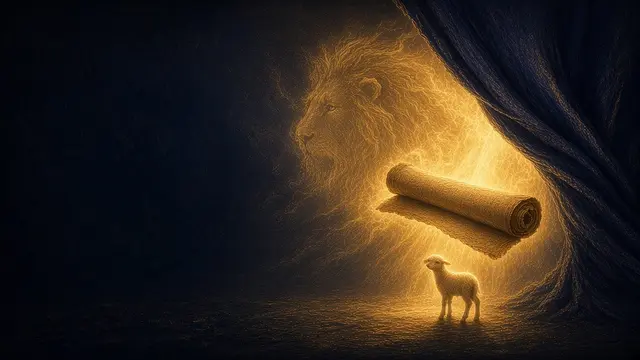 Revelation · Day 11
The Lion Who Is a Lamb
Revelation 5:1-14The Lion of Judah turns out to be a slain Lamb who stands alive, and he alone is worthy to open the scroll.
 Revelation · Day 3
The Love You Started With
Revelation 2:1-7A hard-working, sound church is told that none of it replaces the love it has drifted from.
Got a question first? Read the Revelation FAQ.
Free updates
Stay in the loop
Studies are published every day on the site, free to read. Sign up for the occasional update about Unveiled and the book of Revelation, plus a place to start. You can stop whenever you like.