Day 22
A Lamb's Horns, a Dragon's Voice
Revelation 13:11-18 13 min read WEB
What is Revelation 13:11-18 about?
In short: A second beast, gentle in appearance and deadly in speech, uses signs, an image, and economic pressure to lead the world into worshiping the first beast, and the church is called to wise discernment, loyalty to the Lamb, and no easy answers about the number 666.
Passage at a glance
- Passage
- Revelation 13:11-18 (WEB)
- Series
- Revelation, day 22 of 37
- Section
- The Cosmic Conflict
- Reading time
- 13 minutes
- Topics
- Deception, Discernment, Allegiance, Worship
- Previous passage
- Revelation 13:1-10
- Next passage
- Revelation 14:1-13
Part A Context
Two horns like a lamb's. That is the detail to hold onto today.
Yesterday ended with a call to endurance in the face of a beast from the sea, a power that demands worship and is allowed to make war on the saints for a time. Now John sees a second beast, this one rising from the earth, and its job is not to conquer but to persuade. If the first beast is the power, the second is the publicity. Later in the book John calls him the false prophet (16:13; 19:20).
In the cities of Roman Asia, the worship of Rome and the emperor was kept alive not only by soldiers but by local leaders, priests, festivals, and the trade guilds that held public meals in honour of the gods. The letters to Pergamum and Thyatira have already warned about eating food sacrificed to idols (2:14, 2:20). Many scholars think John's picture grows out of this world, where belonging, income, and religion were braided together. The beast from the earth shows us how a hostile power gets ordinary people to go along, and why the church must learn to see through a gentle face.
Part A Explanation
13:11-12Gentle horns, dangerous voice
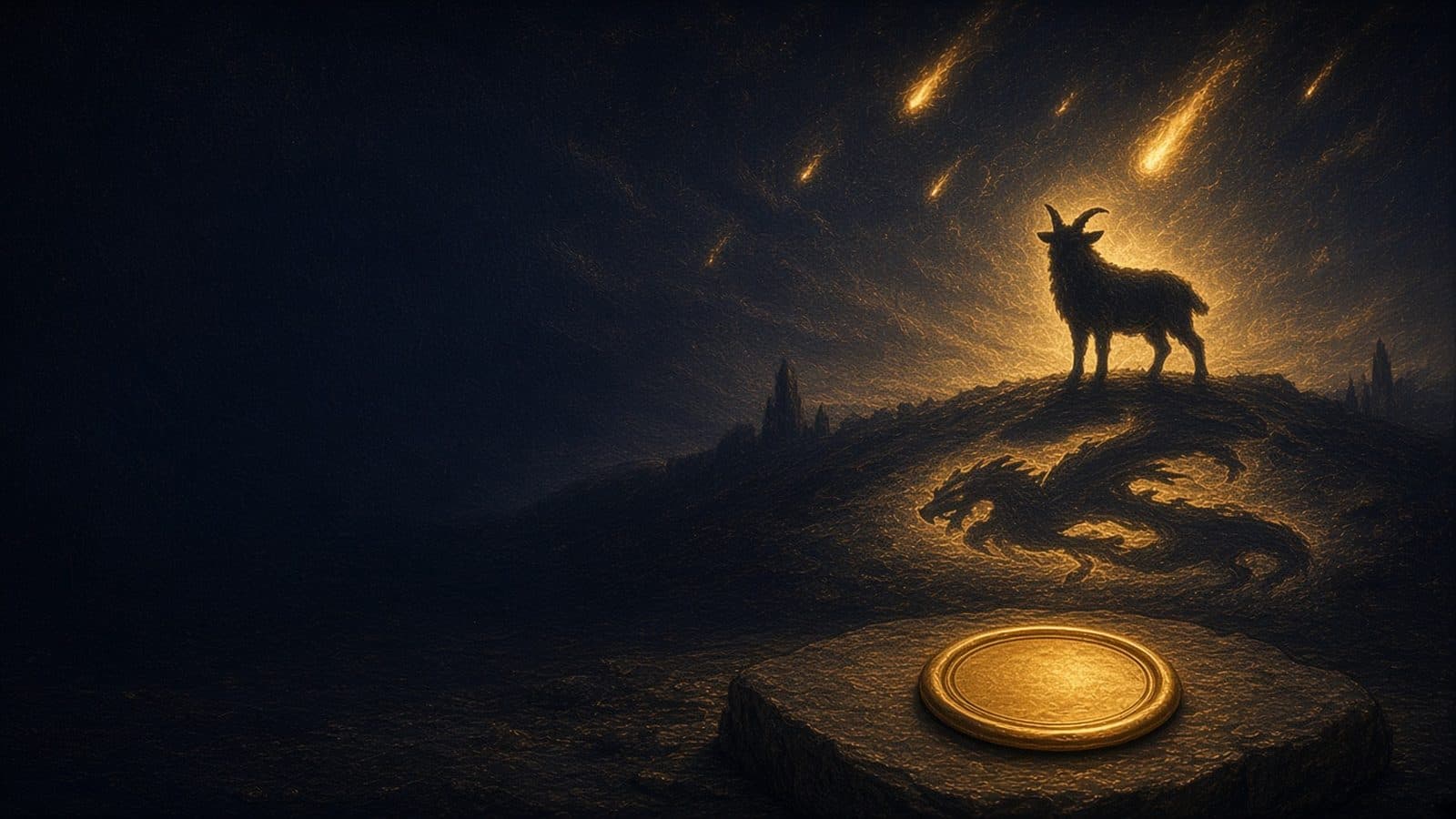
"I saw another beast coming up out of the earth. He had two horns like a lamb, and he spoke like a dragon" (WEB). The first beast came from the restless sea. This one rises from the land, from the settled, ordinary, respectable side of life.
The look is lamb, the voice is dragon. Jesus had warned about this kind of thing: "Beware of false prophets, who come to you in sheep's clothing, but inwardly are ravening wolves" (Matthew 7:15). The danger is not that this beast is obviously monstrous. It is that he is pleasant.
His work is to point the world to the first beast: "He makes the earth and those who dwell in it to worship the first beast." Here is another counterfeit. In John's Gospel the Holy Spirit's work is to point to Christ: "He will glorify me" (John 16:14). The second beast glorifies a different master. Together, the dragon, the first beast, and this false prophet form a shadow of the Father, the Son, and the Spirit, which is why 16:13 can speak of all three mouths together.
Who is the second beast? Views follow those of the first. Many scholars think he stands for the priesthood and local leaders of the imperial cult in Asia. Others see any religious or ideological system that serves the state's claim to ultimate loyalty. Others expect a particular future figure. All agree on the role: a voice, wearing the look of the Lamb, that sends people to worship something other than the Lamb.
13:13-15Fire, image, and breath
"He performs great signs, even making fire come down out of the sky to the earth in the sight of people." The fire is a deliberate echo of Elijah, when "Yahweh's fire fell" on Mount Carmel (1 Kings 18:38), and of the fire that the two witnesses were given in 11:5. The false prophet is imitating the true prophets.
How do you tell the difference? The Bible gives a test, and it is not a test of power. Deuteronomy 13:1-3 says that if a prophet gives a sign that comes true but says, "Let us go after other gods," you are not to listen, for the Lord is testing whether you love him. Jesus said that false prophets "will show great signs and wonders, so as to lead astray, if possible, even the chosen ones" (Matthew 24:24). Miracles do not prove a message. The message proves the miracles.
Next, an image: the people are told to "make an image to the beast." That brings back Daniel 3, where Nebuchadnezzar's golden image was set up on the plain of Dura with the threat of the furnace for anyone who would not worship. It also touches Genesis 1:27, where humans are made in God's image. Idolatry always turns this around: we make an image of what we adore and then become like it.
The image is given breath, so that it speaks and has the unbelieving killed. The Greek word for breath is also the word for spirit. It is a dark parody of the God who breathed into Adam, and of the Spirit who gives life.
13:16-17The mark and the market
"He causes all, the small and the great, the rich and the poor, and the free and the slave, to be given marks on their right hands, or on their foreheads; and that no one would be able to buy or to sell, unless he has that mark, the name of the beast or the number of his name."
Start with what the mark imitates. Israel was told to bind God's words as "a sign on your hand" and "frontlets between your eyes" (Deuteronomy 6:8), and the high priest wore a gold plate on his forehead reading "HOLY TO YAHWEH" (Exodus 28:36). In Revelation 7:3 and 14:1 the Lamb's people are sealed on their foreheads with God's name. Hand and forehead stand for what you do and what you think. The beast wants both.
The mark's Greek word, charagma, means an engraved stamp or imprint, and it was used for the stamp on documents and coins. Many scholars think John's readers would hear economic pressure in this: to trade freely in a city whose guilds met under the gods' patronage, you had to show you belonged. That fits the letters to Pergamum and Thyatira. Others see the mark as a symbol of whole-life allegiance, and others expect a future literal mark.
None of these readings lets us fix the mark on a particular device or institution of our day, and John does not invite that. His concern is whose name you carry. Notice, too, that it reaches "all," with no class exempt. Pressure comes to the rich and poor alike, and it comes through the market. Faithfulness may cost income.
13:18The number of a man
"Here is wisdom. He who has understanding, let him calculate the number of the beast, for it is the number of a man. His number is six hundred sixty-six."
"Here is wisdom" signals a puzzle that rewards a wise reader. In Greek and Hebrew, letters also served as numbers, so a name could be turned into a sum. Many scholars think "Nero Caesar," written in Hebrew letters, adds up to 666, and some ancient manuscripts read 616, which matches a different spelling of the same name. That would suit a first-century picture of an emperor who persecuted Christians.
Others take the number as symbolic. Seven is the number of completeness, and six falls short of it again and again. Humans were made on the sixth day, so "the number of a man" may point to humanity at its highest and still a creature. Repeated three times, it would be the Trinity's counterfeit: complete failure pretending to be perfection. Others expect the number to be solved when the final figure appears.
Two cautions are wise. First, "the number of a man" does not tell us which man. The church has seen many confident solutions over the centuries, and each has aged badly. Second, John calls for wisdom, not for decoding. A reader who knows the Lamb, the cross, and the call to endurance is wise enough to recognise a beast. A reader who has only a calculator is not.
Whatever 666 means, it is a number that stops at six, and the Lamb's people belong to the One who is, and who has always been, beyond it.
Key words in Revelation 13:11-18
- False prophet
- The title John later gives the beast from the earth (16:13; 19:20). He speaks for the first beast, works signs, and leads people into false worship. He is a counterfeit of the Spirit's pointing work.
- Mark (charagma)
- An engraved stamp or imprint, like the mark on a seal or coin. It marks ownership and loyalty, in imitation of God's seal on his own people.
- Image (eikon)
- A likeness or statue. Humans were made as God's image, and idolatry produces an image of what we worship.
- Number (arithmos, 666)
- A figure that can be read through the numerical value of letters, or as a symbol of humanity falling short of seven. John calls for wisdom, not for a code-breaking contest.
Cross references
- Matthew 7:15-16False prophets in sheep's clothing, to be known by their fruit, the lamb's look with a wolf's heart.
- Deuteronomy 13:1-3A sign that comes true does not validate a prophet who leads to other gods.
- Daniel 3:1-6A golden image, a universal summons to worship, and a furnace for refusers.
- Deuteronomy 6:8God's words bound on the hand and between the eyes, the pattern the beast's mark imitates.
- Revelation 7:3The servants of God sealed on their foreheads, the true seal against the beast's mark.
- 1 John 4:1-3Test the spirits by their confession of Jesus Christ come in the flesh.
Part B Three lenses on the text
The Pattern
How the whole Bible speaks here
Notice how quietly the second beast works. He does not make war, he does not hold a throne, and he does not claim a crown for himself. Everything he does points away from himself. That is the mark of a counterfeit Spirit, and John wants us to see the full counterfeit: the dragon in the place of the Father, the first beast in the place of the Son, and the second beast in the place of the Spirit. In 16:13 all three speak together, and by 19:20 two of them meet the same end.
Now look at the stamps. God seals his servants on their foreheads (7:3), and the Lamb's name stands there in 14:1. The beast's mark sits on the hand or the forehead. The Old Testament had already pictured God's people carrying his words on hand and brow, and Ezekiel 9:4 describes a protecting mark on the foreheads of those who grieve over sin. Revelation has taken the idea of a sign of ownership and set two owners against each other.
Even the fire is a mirror. In chapter 11 fire came from the mouths of the witnesses. Here it falls from the sky at the beast's command. The struggle of Revelation is not between a quiet God and a loud devil. It is between two kinds of power, and only one of them is real.
The Glory
What this shows us of God
If the first beast shows us evil's strength, the second shows us its method, and in both cases God sits above the whole drama. The false prophet works signs "he was granted to do." Even his power to deceive is on a leash.
Jesus gave a promise inside his warning. False prophets would lead astray "if possible, even the chosen ones." That phrase "if possible" is a quiet wall around God's people. It is not possible. Elsewhere Jesus says of his sheep, "They will never perish, and no one will snatch them out of my hand" (John 10:28). The same hand that was pierced is the hand that holds us, and what holds us is not our alertness but his grip.
That is where the mark's meaning turns. We carry a seal more lasting than any mark on our body, the name of the Lamb, and the One who put it there did so by his own wounds. The beast may take away what we can buy or sell. He cannot take away what Paul calls "your life is hidden with Christ in God" (Colossians 3:3).
God's glory is not that his people never feel the squeeze. It is that, in the squeeze, they discover that he is worth more than everything the market can give.
The Challenge
What it asks of us
Most of us read this chapter and ask the same question first: who is it? And it is worth noticing that the question has kept people busy for two thousand years with very little to show for it.
Here is a better question. What is it that I would find hardest to lose? Because the second beast's strategy is not first to threaten us with death. It is to make belonging cost something. No buying, no selling, no place at the table. Many of us do not need a beast to ask us to trim our faith. A small fear of looking odd or losing a contract or being left out of the group chat is often enough. The most successful pressure is the pressure we apply ourselves.
Jesus said, "You can't serve both God and Mammon." The beast is simply Mammon with a lamb's face and a dragon's voice. If you are honest, there are probably places in your life where you are already giving small worship to security, status, or approval, long before anyone has asked you to.
So do something concrete. Pick one place where your money, your time, or your reputation is quietly at war with your loyalty to Jesus. Decide what faithfulness looks like there, and do it this week, gently and without announcing it. The mark is refused one small decision at a time.
Part C Daily devotional
Reflection
Think about counterfeit money. The forger's best work is not the bill that looks wrong, but the one that looks completely right. It takes a trained eye, a familiarity with the real thing, to spot the difference. The people who handle the genuine notes every day are the ones who notice.
That is what the church is asked to do with a lamb's horns and a dragon's voice. We cannot catch every deception by being clever. We catch them by knowing the real thing so well that the false rings wrong. If you know the Lamb, the cross, the gospel, and the Spirit who points to Christ, you will hear a false voice when it begins to point somewhere else.
So today is not about decoding a number. It is about getting closer to the One whose voice you can trust. "My sheep hear my voice, and I know them, and they follow me." You do not need to be an expert on beasts. You need to be a sheep who stays near the Shepherd.
Spend time with him today. Read the Gospels. Listen. The best defence against a counterfeit is a love for the original.
Questions for journaling
- The second beast has a lamb's look and a dragon's voice. Why do you think John shows evil as gentle and persuasive rather than only as violent?
- Deuteronomy 13 says that miracles do not validate a message that leads away from God. How does that change the way you test what you hear and read?
- The mark touches the market: no buying, no selling. Where might faithfulness to Jesus cost you income, comfort, or belonging?
- What small idols, such as security, approval, and status, receive your worship before anyone has asked you to give it?
- What would it look like this week to stay near the Shepherd so that you recognise his voice?
Prayer
Father, you made me in your image, and you alone are worthy of my worship. Keep me from the voices that look like a lamb but speak like a dragon. Teach me to test everything by your word and by your Son. Forgive me for the small worship I give to money, comfort, and approval. Seal me with the name of the Lamb, and hold me in your hand when I feel the squeeze. Make me wise, not curious about the wrong things, and loyal when loyalty costs something. In the name of Jesus, my Shepherd. Amen.
Read one of the Gospels for ten minutes today, listening for the voice of Jesus, and then name one voice in your life that has been pointing you away from him.
I saw another beast coming up out of the earth. He had two horns like a lamb, and he spoke like a dragon.Revelation 13:11 (WEB)
Common questions about Revelation 13:11-18
What is Revelation 13:11-18 about?
A second beast, gentle in appearance and deadly in speech, uses signs, an image, and economic pressure to lead the world into worshiping the first beast, and the church is called to wise discernment, loyalty to the Lamb, and no easy answers about the number 666.
Where does Revelation 13:11-18 fit in the book of Revelation?
Two horns like a lamb's. That is the detail to hold onto today.
What does “False prophet” mean in Revelation 13:11-18?
The title John later gives the beast from the earth (16:13; 19:20). He speaks for the first beast, works signs, and leads people into false worship. He is a counterfeit of the Spirit's pointing work.
What does “Mark (charagma)” mean in Revelation 13:11-18?
An engraved stamp or imprint, like the mark on a seal or coin. It marks ownership and loyalty, in imitation of God's seal on his own people.
What does “Image (eikon)” mean in Revelation 13:11-18?
A likeness or statue. Humans were made as God's image, and idolatry produces an image of what we worship.
How can I apply Revelation 13:11-18 today?
Read one of the Gospels for ten minutes today, listening for the voice of Jesus, and then name one voice in your life that has been pointing you away from him.
What is a good memory verse for Revelation 13:11-18?
Revelation 13:11: “I saw another beast coming up out of the earth. He had two horns like a lamb, and he spoke like a dragon.” (WEB)
Free daily email
The daily study, in your inbox
One passage a day: a careful explanation, three lenses and a short devotional, sent to you by email. Free, and you can stop whenever you like.