Day 26
They Did Not Repent
Revelation 16:1-11 13 min read WEB
What is Revelation 16:1-11 about?
In short: As the first five bowls fall on the earth in a pattern borrowed from the Exodus plagues, heaven declares God's judgments righteous, and the stubborn refusal of those under judgment to repent shows how deep the human heart's rebellion runs.
Passage at a glance
- Passage
- Revelation 16:1-11 (WEB)
- Series
- Revelation, day 26 of 37
- Section
- The Seven Bowls
- Reading time
- 13 minutes
- Topics
- Justice, Repentance, Exodus, Wrath, Mercy
- Previous passage
- Revelation 15:1-8
- Next passage
- Revelation 16:12-21
Part A Context
If you could watch judgment fall with your own eyes, would it change you? That is the uncomfortable question underneath today's passage.
Yesterday we stood on the sea of glass and heard the saints sing that God's ways are righteous and true. We left the temple filled with smoke, closed to everyone until the plagues were done. Now a loud voice comes out of that temple. With no one else able to enter, it can only be God's own voice, giving the command: "Go and pour out the seven bowls of the wrath of God on the earth!" (WEB).
These bowls are the third and final series of sevens, after the seals and the trumpets. The trumpets struck a third of the earth, sea, and sky. The bowls strike without that limit. Many readers see the three series as telling the same story with growing intensity, while others see a forward-moving sequence. Either way, the first readers, living under an empire that demanded worship, were being shown that no throne on earth is the highest.
Part A Explanation
16:1-2The first bowl: sores on the earth
The first angel pours his bowl "into the earth," and "a harmful and evil sore" breaks out on those who "had the mark of the beast, and who worshiped his image." The target is exact. Not every person on earth, but those who bear the beast's mark.
This is plague number six from Exodus. In Exodus 9:8-11, Moses sprinkled furnace ash toward the sky, and boils broke out "on man and on animal." Even the magicians "couldn't stand before Moses because of the boils." The Egyptian experts, who had matched some of the early signs, had nothing left.
Notice who sends the order. Nothing in these verses is random or accidental. The voice is from the temple, the angels are God's servants, and the bowls come from the throne. Chapter 13 gave the beast the power to compel loyalty with a mark. Chapter 16 shows who is actually in charge. And just as in Egypt, where the land of Goshen was spared some of the plagues (Exodus 8:22; 9:26), here too the judgment is aimed at those who belong to the beast, not at those who bear the Lamb's name.
16:3-4Sea and rivers turn to blood
The second bowl goes into the sea and the third into "the rivers and springs of water," and all turn to blood. This recalls the first plague of Egypt, when Moses struck the Nile and "all the waters that were in the river were turned to blood" (Exodus 7:20). The second and third trumpets had struck only a third of the sea and the waters (8:8-11). Here the effect is total: "Every living thing in the sea died."
The phrase "blood as of a dead man" describes thickened, lifeless blood. It is a repulsive picture, and meant to be. A sea that once symbolised chaos and trade and the beast's own origin now becomes a grave.
There is also an Egyptian echo with a hard edge. Pharaoh had commanded that every newborn Hebrew son be cast into the river (Exodus 1:22). The Nile later ran with blood. Revelation lets the reader see a principle that the Bible keeps returning to: those who spill innocent blood find that the blood does not simply vanish. Water, life's basic gift, becomes a witness. In the next verses, heaven itself explains what is going on.
16:5-7Heaven says amen
Before the bowls go any further, two voices speak. First the "angel of the waters" says: "You are righteous, who are and who were, O Holy One, because you have judged these things. For they poured out the blood of the saints and prophets, and you have given them blood to drink. They deserve this." Then "the altar" says, "Yes, Lord God, the Almighty, true and righteous are your judgments."
Two things stand out. The first is a missing phrase. In 1:4 and 1:8, God is "who is and who was and who is to come." Here it is only "who are and who were." The "to come" has gone. Many scholars see the reason: he has come (compare 11:17, where the same shorter form appears). What remains is to see him act.
The second is the altar. Back in the fifth seal, the martyrs beneath the altar cried out, "How long, Master, the holy and true, until you judge and avenge our blood?" (Revelation 6:10). Now the altar answers, "true and righteous are your judgments." The prayers of the saints were never lost. They have been heard.
The justice is poetic: those who shed the saints' blood are given blood to drink. It is hard to read, and the angel does not say it with delight. He says it with the plain voice of someone who sees that it is fair.
16:8-9The fourth bowl: scorched and defiant
The fourth angel pours his bowl on the sun, and it was "given to him to scorch men with fire." There is a sharp contrast here with chapter 7, where the redeemed are promised that "neither will the sun beat on them, nor any heat." The same sun that is a blessing for the Lamb's people becomes a torment for those who have refused him.
Then comes the response, and it is the heartbreak of the chapter: "People were scorched with great heat, and people blasphemed the name of God who has the power over these plagues. They didn't repent and give him glory."
Read the second half twice. The people know exactly who is behind the plagues. They name him and know that he "has the power." Yet knowing his power does not turn their hearts. They curse him instead. Pharaoh followed a similar path. Even his own magicians said, "This is God's finger" (Exodus 8:19), and still "Pharaoh's heart was hardened."
Repentance here is described as giving God glory, an acknowledgment that he is who he says he is and that we are not. That is what they refuse. It tells us that the root problem of the human heart is not lack of evidence. It is unwillingness to bow.
16:10-11The fifth bowl: darkness on the throne
The fifth bowl lands "on the throne of the beast, and his kingdom was darkened." This matches the ninth plague of Egypt, a darkness so thick that it "may be felt," when "nobody rose from his place for three days" (Exodus 10:21-23). It strikes at the heart of the beast's power, the seat from which he demanded worship. The bowl is aimed at the very centre of the counterfeit kingdom, and its light goes out.
Then comes the response again: "They gnawed their tongues because of the pain, and they blasphemed the God of heaven because of their pains and their sores. They didn't repent of their works."
Notice the phrase "the God of heaven." It is exactly what the ones who repented used earlier in the book. In 11:13, after a great earthquake, the survivors "gave glory to the God of heaven." So the same title appears in the mouths of the repentant and the defiant. Repentance is possible throughout the book. Both responses are open, and the same event produces both.
A final detail: they blaspheme because of "their sores," which belong to the first bowl. The pain has a memory. Their suffering has not softened them. It has hardened them further.
Key words in Revelation 16:1-11
- Bowl (phialē)
- A wide, shallow vessel used in worship for pouring out offerings. The bowls of wrath are holy acts poured out from the sanctuary, answering the prayers of the saints.
- Righteous (dikaios)
- Just, doing what is right. The heavenly voices call God's judgments righteous because he repays the shedding of innocent blood and never acts unfairly.
- Blasphemed (eblasphēmēsan)
- To speak against God, to curse or slander him. Three times in these verses the people curse God while under judgment instead of turning to him.
- Repent (metanoeō)
- To change your mind and turn. In 16:9 it is explained as giving God glory, which is the one thing the people under judgment will not do.
Cross references
- Exodus 7:20-21The Nile turns to blood, the model for the second and third bowls.
- Exodus 9:8-11Boils on man and animal, the model for the first bowl.
- Exodus 10:21-23Darkness that can be felt, the model for the fifth bowl.
- Revelation 6:9-10The martyrs ask how long until God avenges their blood; the altar now answers.
- Revelation 11:13Survivors of an earlier judgment gave glory to the God of heaven, showing repentance is possible.
- 2 Peter 3:9God is patient, not wishing that any should perish, but that all should come to repentance.
Part B Three lenses on the text
The Pattern
How the whole Bible speaks here
The Exodus echoes are obvious, but they do something deeper than decorate. Exodus 12:12 says that against "all the gods of Egypt" the Lord would "execute judgments." The plagues were aimed at the things Egypt trusted: the Nile, the sun, the power of Pharaoh's throne. The bowls do the same. The sea, the rivers, the sun, and the beast's own throne are each targeted. The things the empire worshipped and relied on become the instruments of its undoing.
Now notice what the bowls reverse. Revelation promises its readers three things. Living water: "a river of water of life" in 22:1. Light: in 21:23 the city "has no need for the sun," because the glory of God lights it. And protection: "neither will the sun beat on them." Each bowl turns one of these upside down for the beast's people. Water becomes blood, the sun becomes a furnace, and light becomes darkness. The final picture of the book is the gift, and the bowls show what its absence looks like.
The pattern also teaches us to read the plagues as signs and not just as disasters. In Exodus the purpose was that Egypt would "know that I am Yahweh" (Exodus 7:5). The bowls repeat the goal, and sadly, the response too.
The Glory
What this shows us of God
Do not hurry past the line that unsettles us most: "They deserve this." It is easy to flinch, and I think the flinch is partly healthy. We should never delight in anyone's pain. Yet the heavenly voices do not apologise, and they are not cruel. They see something we often cannot: that innocent blood matters to God. "The voice of your brother's blood cries to me from the ground" (Genesis 4:10), he told Cain. "Precious in Yahweh's sight is the death of his saints" (Psalm 116:15). Every injustice is seen.
But look at how long it took. These are the last plagues after seals and trumpets that each gave warning, after centuries of patience. Peter says that "the Lord is not slow concerning his promise" but "is patient with us, not wishing that any should perish, but that all should come to repentance" (2 Peter 3:9). God's wrath is never hasty.
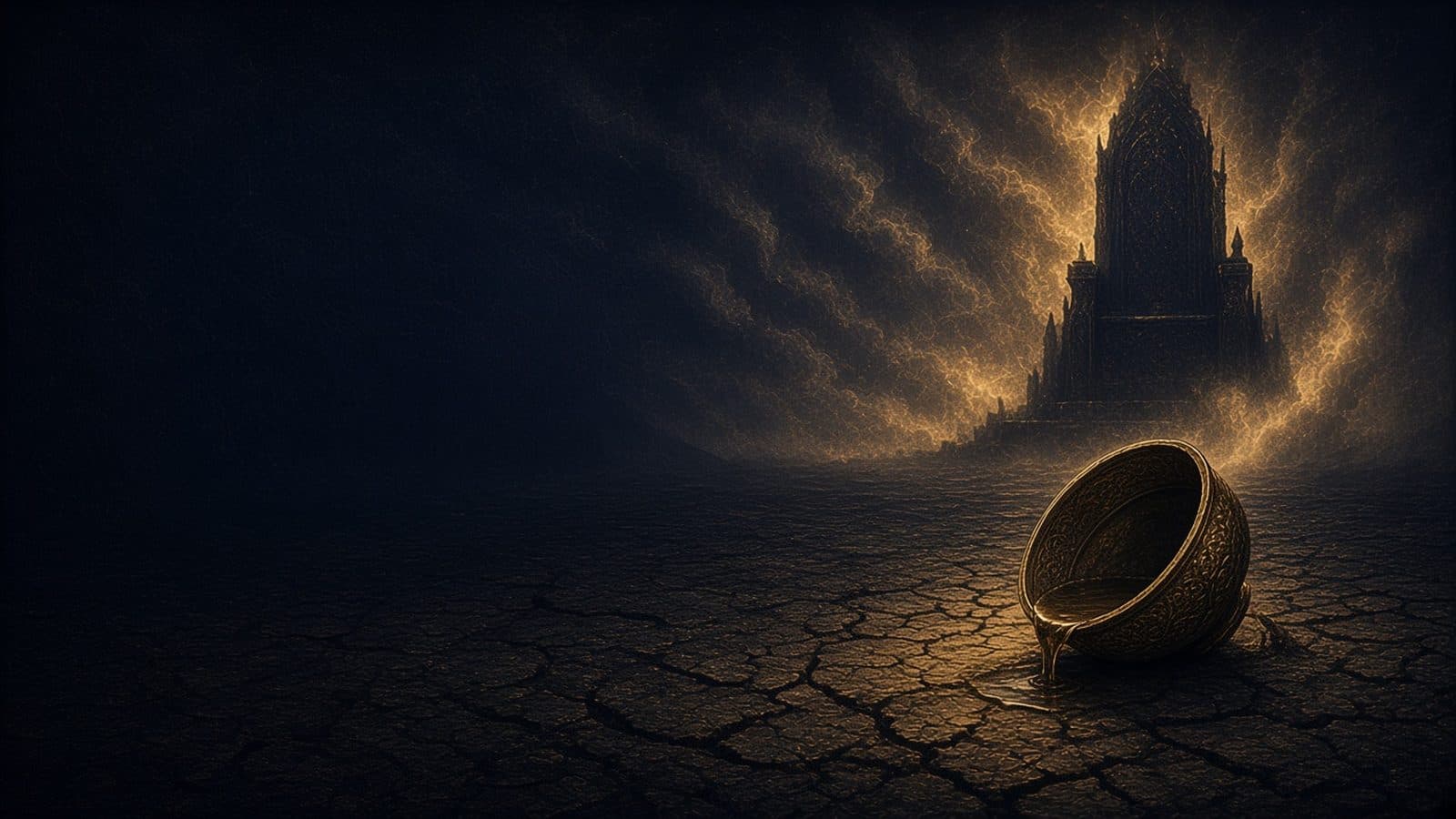
And we must see the cup. The bowls hold a cup of wrath, and Jesus knew what it was. In Gethsemane he prayed, "My Father, if it is possible, let this cup pass away from me" (Matthew 26:39), and then he drank it for those who trust him. That is why a believer reads this passage with trembling and with hope. The cross is where justice and mercy are both satisfied, and the Lamb is where the bowls' fury was met for us.
The Challenge
What it asks of us
I find the repeated phrase in this passage almost painful: they did not repent. They felt the pain, they saw whose hand it was, and they chose to curse.
Can I ask you to be honest with me, and with yourself, about what you do with pain? When life squeezes you, a diagnosis, a betrayal, a long season of struggle, what comes out? I do not mean the polite things you say at church. I mean the thing in your chest at two in the morning. Is it a turn toward God, or a clenched fist?
Here is what scares me. These people were not ignorant of God. They knew he had power. And knowing was not enough. It is possible to believe in God, to say the right words, and still refuse to give him glory in the thing that costs us most.
So what is the hard spot in your heart, the thing you have not surrendered? Perhaps a grudge you keep tending, a habit you protect, a bit of your life you have not let him touch.
The good news is that the door is open. Every hardened heart has a way back, and it starts with one small honest sentence: Lord, I was wrong.
Part C Daily devotional
Reflection
The same fire that softens wax hardens clay. It is not the fire that decides what happens. It is what the material is made of.
I think that is what this passage is about. Five bowls fall and every heart under them hardens. Revelation shows us only that side, as a warning. But the pattern is familiar from life. Some of us, when we are hurt, soften. We cry, we reach, we finally say the prayer we have been avoiding. Others of us get harder. We tighten our grip and fold our arms and refuse to say sorry to anyone, including God.
If you are honest, you probably know which way you lean. I do. And it is worth knowing, because the stubborn heart is not a condition that only certain people have. It is something all of us are capable of.
But here is the quiet mercy beneath the harshness. God never stops opening the door. He waited through seals and trumpets. The bowls come only after a long season in which the door stood open. And the One who holds the bowls is also the One who drank the cup for you. If today you are hurting, you can bring it to him as a person comes to a friend who has already borne the worst.
Tomorrow we reach the sixth and seventh bowls, and the final gathering of the kings.
Questions for journaling
- How do you usually respond when you are in pain or under pressure: do you tend to soften toward God, or to harden? What does that tell you?
- The people in these verses knew God had power over the plagues, yet did not give him glory. What is the difference between knowing about God's power and bowing to it?
- The heavenly voices call God's judgments "true and righteous." Is that easy or hard for you to say? Why?
- What is one small, honest sentence of repentance you could bring to God today?
Prayer
Lord God, Almighty, you are righteous in all your judgments, and you remember every drop of innocent blood. I am amazed by your patience and afraid of my own hard heart. When pain comes, keep me from cursing you and bring me to my knees. Forgive me for the things I have refused to give up. Thank you, Jesus, that you drank the cup I deserved. Soften what is stubborn in me. Teach me to give you glory in the hardest places, and to leave justice in your hands. Amen.
The next time something irritates or hurts you today, pause for one breath and pray a short prayer asking the Lord what he is showing you. Then tell him one specific thing you need to stop resisting.
Yes, Lord God, the Almighty, true and righteous are your judgments.Revelation 16:7 (WEB)
Common questions about Revelation 16:1-11
What is Revelation 16:1-11 about?
As the first five bowls fall on the earth in a pattern borrowed from the Exodus plagues, heaven declares God's judgments righteous, and the stubborn refusal of those under judgment to repent shows how deep the human heart's rebellion runs.
Where does Revelation 16:1-11 fit in the book of Revelation?
If you could watch judgment fall with your own eyes, would it change you? That is the uncomfortable question underneath today's passage.
What does “Bowl (phialē)” mean in Revelation 16:1-11?
A wide, shallow vessel used in worship for pouring out offerings. The bowls of wrath are holy acts poured out from the sanctuary, answering the prayers of the saints.
What does “Righteous (dikaios)” mean in Revelation 16:1-11?
Just, doing what is right. The heavenly voices call God's judgments righteous because he repays the shedding of innocent blood and never acts unfairly.
What does “Blasphemed (eblasphēmēsan)” mean in Revelation 16:1-11?
To speak against God, to curse or slander him. Three times in these verses the people curse God while under judgment instead of turning to him.
How can I apply Revelation 16:1-11 today?
The next time something irritates or hurts you today, pause for one breath and pray a short prayer asking the Lord what he is showing you. Then tell him one specific thing you need to stop resisting.
What is a good memory verse for Revelation 16:1-11?
Revelation 16:7: “Yes, Lord God, the Almighty, true and righteous are your judgments.” (WEB)
Free daily email
The daily study, in your inbox
One passage a day: a careful explanation, three lenses and a short devotional, sent to you by email. Free, and you can stop whenever you like.